
Viktor Wagner · 9 November 2026
Interdisciplinary Studies See Steady Growth Among Polish Undergraduates as Regional Reforms Broaden Access
Polish higher education has undergone significant shifts in recent years as regional access reforms expand opportunities for students outside major urban centers, and interdisciplinary studies have emerged as a key area of enrollment growth. Data from the Ministry of Science and Higher Education indicates that programs combining fields such as technology with social sciences or environmental studies with engineering have seen consistent increases in undergraduate applications since the reforms took effect. These changes align with broader European efforts to diversify educational pathways, and observers note that smaller regional institutions now account for a larger share of such combined-degree enrollments compared to previous cycles.
Regional Access Reforms and Their Impact
Reforms introduced through national legislation have focused on reducing geographic barriers by increasing funding for satellite campuses and digital enrollment tools in provinces like Podlaskie and Lubelskie. According to figures released by the European Commission in its education monitoring reports, participation rates in higher education among rural applicants rose by 12 percent between 2023 and 2025, with many students opting for flexible structures that allow cross-departmental coursework. The policies also include incentives for universities to develop joint curricula, and this has encouraged institutions in less densely populated areas to partner with technical colleges on shared modules.
November 2026 marks the scheduled rollout of additional support measures under the updated regional development framework, including expanded scholarship allocations tied to interdisciplinary tracks. Those measures build on earlier adjustments that eased credit transfer rules across institutions, and researchers tracking enrollment patterns have documented a corresponding uptick in students pursuing dual-focus degrees rather than single-discipline paths.
Enrollment Trends in Combined Programs
Statistics compiled by the Central Statistical Office of Poland show that the number of undergraduates registered in interdisciplinary programs grew from approximately 18,000 in the 2022-2023 academic year to over 27,000 by 2025-2026. Fields such as digital humanities, sustainable development studies, and health informatics have recorded the largest gains, while traditional single-subject majors have experienced comparatively flat demand in regional settings. Observers attribute part of this movement to labor market signals that favor graduates with mixed skill sets, and university administrators report higher retention rates among students enrolled in these blended offerings.
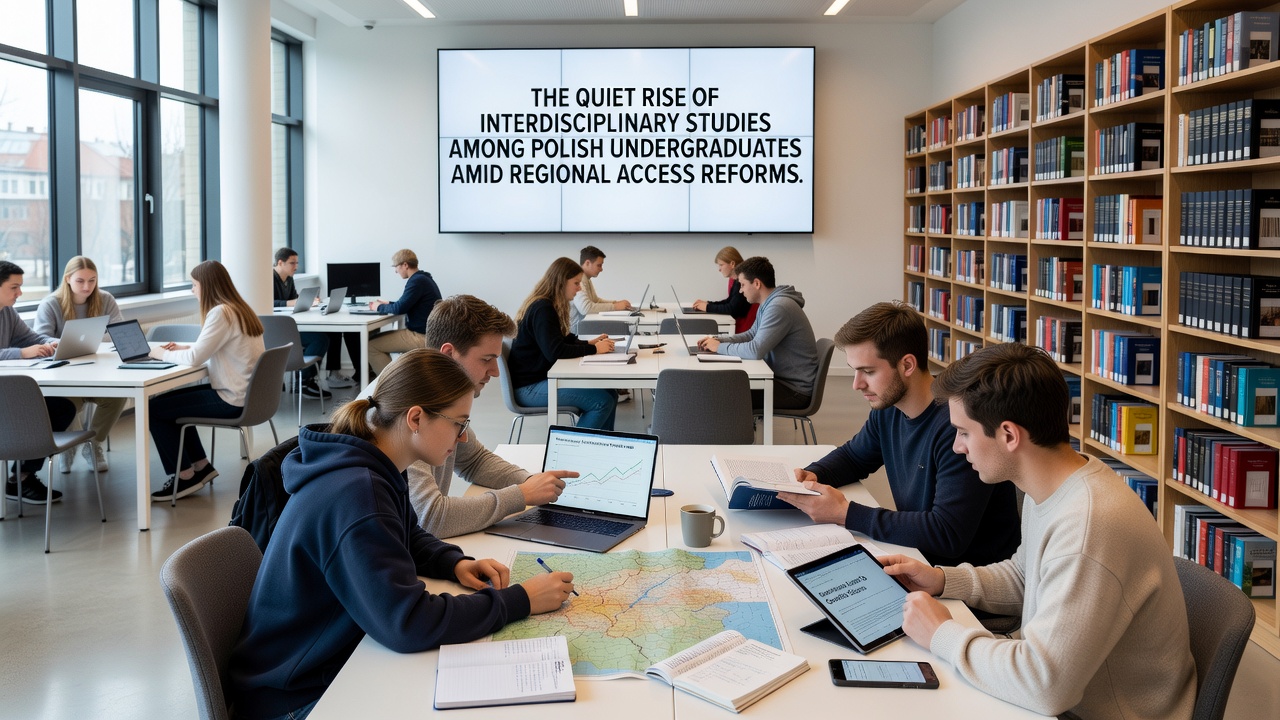
One study conducted by analysts at the Jagiellonian University examined application data from six regional universities and found that students from smaller towns were twice as likely to select programs spanning multiple faculties when financial aid packages covered relocation or commuting costs. The analysis also highlighted that female applicants comprised 58 percent of new interdisciplinary enrollments, a distribution that mirrors patterns observed in broader European higher education surveys published by the OECD. These findings suggest structural factors rather than isolated preferences drive the shift.
Institutional Adaptations and Curriculum Changes
Universities across Poland have responded by revising degree frameworks to include mandatory cross-disciplinary modules and joint supervision arrangements between departments. At institutions such as the University of Warmia and Mazury, administrators introduced capstone projects that require teams to integrate perspectives from engineering, economics, and environmental policy, and early outcome data indicate improved completion rates for participants. Similar initiatives appear at technical universities in Silesia, where partnerships with regional employers have shaped curricula around applied problem-solving that spans traditional boundaries.
Faculty development programs supported by EU structural funds have trained instructors to deliver content across disciplinary lines, and reports from the Conference of Rectors of Academic Schools in Poland note increased collaboration between humanities and STEM departments as a direct result. Credit mobility agreements now allow students to accumulate points from partner institutions within the same region, reducing the administrative hurdles that previously limited such combinations.
Conclusion
The combination of targeted access reforms and evolving student preferences has positioned interdisciplinary studies as a growing segment within Polish undergraduate education, particularly at institutions serving regional populations. Continued monitoring of enrollment and completion metrics through 2026 and beyond will clarify the long-term effects of these policy adjustments on institutional structures and graduate outcomes.